Plant Profile: Persimmon
Read More
Dark Forest is coming October 16-17, 22-24, and 30-31. Click for tickets.


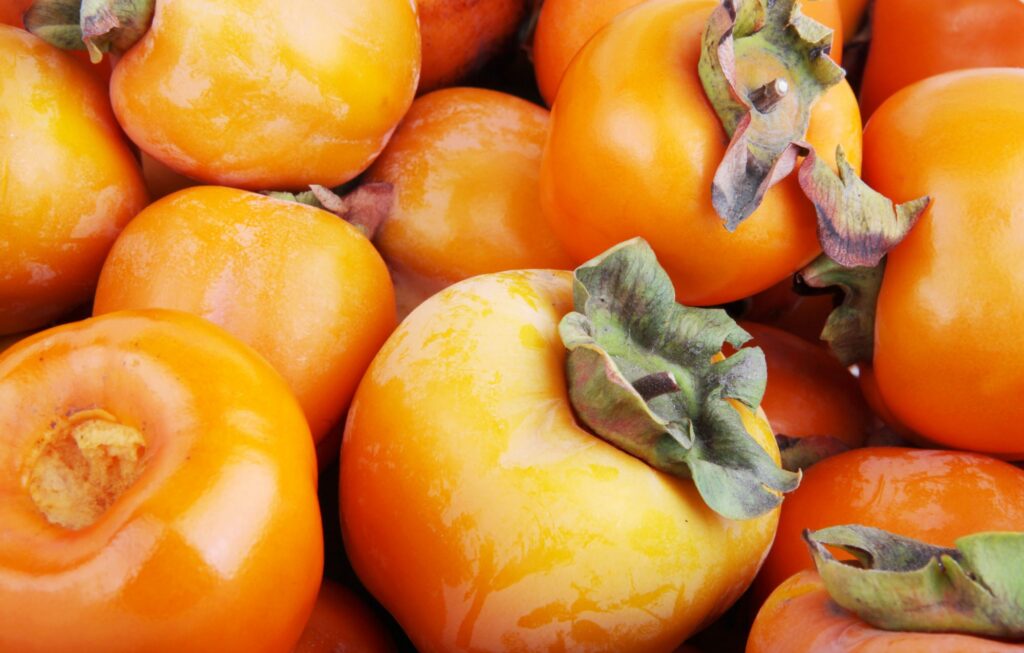
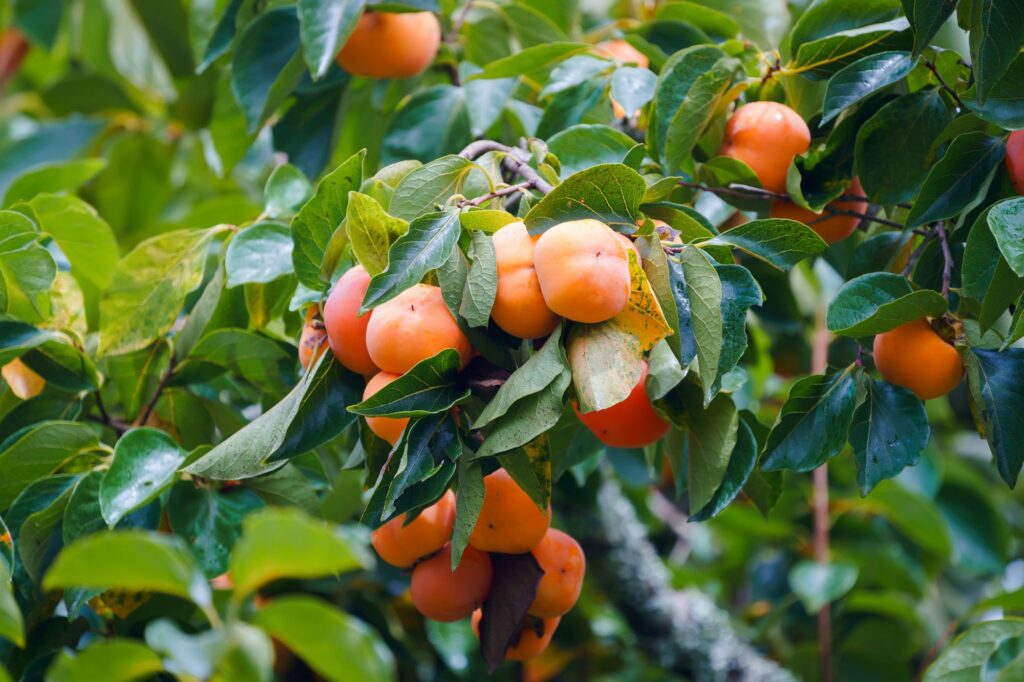
Each autumn, the leaves on the persimmon begin to turn, its distinctive dark bark stands out against the thinning foliage, and small orange fruits hang from the branches or, more often, lie scattered beneath them. For those who know the tree, fall has arrived.
American persimmon (Diospyros virginiana) is a Missouri native with a remarkable combination of ornamental beauty, wildlife value, and edible fruit.
It is also a tree that rewards patience. Bite into a persimmon too early and you’ll understand exactly why this fruit has inspired generations of jokes, folklore tales, and warnings. Wait until the fruit is fully ripe and the experience is entirely different: soft, sweet and intensely flavorful.
American persimmon is a medium-sized deciduous tree that can reach 60 feet tall, although open-grown trees are often shorter and broader. Its range covers much of Missouri, with the notable exception of the state’s northwestern counties. In nature, it can be found in a surprisingly wide variety of places, from rocky woods and glades to old fields, prairies, thickets and stream valleys.
Perhaps its most memorable feature is its bark. Dark gray-brown to nearly black, it is divided into chunky rectangular blocks by deep furrows, giving the trunk an appearance often compared to alligator hide or a checkerboard. Even after the leaves have fallen, the bark makes persimmon easy to recognize.
The leaves are relatively simple and can contribute yellow, orange, or reddish tones to the autumn landscape. Persimmons are a Missouri native suitable for USDA Zones 4–9, with a mature height of roughly 35–60 feet.
At Powell Gardens, that combination of distinctive bark, fall color, and late-season fruit makes persimmon an especially interesting tree to notice as the Gardens transition to winter.
Persimmon flowers appear in late spring to early summer. One of the plant’s more unusual characteristics is that male and female flowers generally occur on separate trees. Consequently, gardeners interested in harvesting fruit need to consider pollination when selecting trees.
The fruit develops through summer and ripens in fall, typically from September into October. When immature, persimmons contain tannins that produce an unmistakable astringent sensation. The result is the legendary “pucker” that has made unripe persimmons the stuff of Missouri folklore.
University of Missouri horticulturist David Trinklein explains that the tannins are responsible for what locals sometimes call “pucker mouth,” and emphasizes that the fruit needs to be fully ripe before its astringency subsides. Importantly, freezing itself does not cause the tannins to disappear; ripening is a matter of time rather than temperature.
So how do you know when a persimmon is ready?
Look for fruit that is deeply colored and extremely soft. We recommend waiting until the fruit becomes so soft that the skin begins to sag and the pulp turns mushy. In other words: when you think it might be too soft, it may finally be perfect.
“Persimmons can be found at Powell Gardens in both our managed pastures and perennial gardens. The easiest way to see persimmon trees up close is right in front of the Missouri Barn. We have several cultivated varieties of persimmon surrounding the Villandry,” says Christian Van Matre (Horticulturist). “If you’ve visited in the fall, you may have seen them smashed on our walkways. They are visible for both our fall and winter festivals, so I get to have an intimate relationship during the “floor jelly season” in the Heartland Garden.”
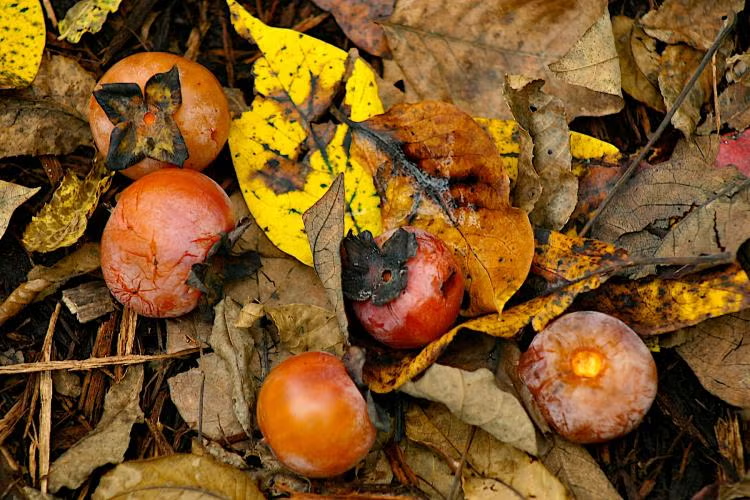
Humans aren’t the only ones waiting for persimmons to ripen.
Deer, opossums, squirrels, raccoons, foxes, coyotes, wild turkeys, and numerous birds all make use of the fruit, making persimmon an important late-season food source for wildlife.
Grow Native! notes that persimmon provides food for birds and small animals and serves as a host plant for butterfly and moth larvae, including the luna moth. (Grow Native! recommends using the tree in hedgerows, thickets or groves, particularly where its tendency to form thickets is an advantage rather than a nuisance.)
The tree also contributes to habitat in another way as a pioneer species. Pioneer trees are the first to grow in land damaged by natural disasters (like fires) or human activity (like logging or farming). These trees help to fix soil, provide share, and enable other species to return to the area. Persimmon trees can help disturbed landscapes move toward a more mature ecosystem.
That makes persimmon a wonderful example of a plant that does more than simply occupy space in a landscape. It participates in the larger garden ecosystem.
Once ripe, American persimmons have a soft, almost custard-like pulp with a rich sweetness. Traditionally, the fruit has been incorporated into puddings, breads, cakes, and other baked goods. The seeds and fibrous material can be removed by pressing the fruit through a strainer or food mill, leaving behind bright orange pulp ready for cooking.
The fruit’s culinary history runs deep in Missouri. In Missouri Life, Julie Brown Patton recounts the long-standing enthusiasm for the native fruit, including a 1915 description calling the persimmon “the glory of Missouri woods in the late fall-time.”
That history is still visible in the way people talk about persimmons today. Missouri’s native fruit has found its way into everything from traditional pudding and bread to jam, beer and wine.
And then there is the famous persimmon seed.
Slice open a persimmon seed and you may find a pale embryo inside that resembles a piece of cutlery. Ozark and Appalachian folklore holds that these shapes (thought to look like a spoon, knife, or fork) predict the coming winter. A spoon supposedly means snow, a knife means cold, and a fork suggests a milder season.
It’s a charming tradition … but not a scientific forecasting method.
Still, the persistence of this bit of folklore says something about the cultural importance of persimmon. This is a fruit that has long connected people to seasonal changes, local landscapes and the rhythms of the natural world.
For gardeners considering an American persimmon, choose a sunny location and give the tree room to mature. Grow Native! recommends full sun and notes that the species can tolerate a range of soil moisture conditions, from dry to moist. Missouri Botanical Garden likewise lists persimmon as adaptable to dry-to-medium soils.
There are a few considerations before planting:
For a naturalistic or wildlife-focused planting, however, those characteristics can become assets rather than drawbacks.
The American persimmon may not have the instant visual drama of a magnolia in bloom or the familiar autumn spectacle of a maple. Its appeal unfolds more slowly.
First comes the unusual bark. Then the subtle flowers. Then the changing leaves. And finally, when the garden is beginning its retreat toward winter, those glowing orange fruits appear.
It is a tree that feeds wildlife, supports insects, carries a long human history, and offers one of Missouri’s most distinctive native fruits.
So the next time you encounter a persimmon at Powell Gardens or elsewhere in Missouri, take a closer look. Check the bark. Look for the fruit beneath the tree. And if you’re tempted to taste one, remember the most important rule of all: Wait for the persimmon to become soft. Very soft.