Why Become a Powell Gardens Member?
Read More
Powell Gardens is open Tuesday-Sunday (9 a.m. - 5 p.m.). Click for hours of operation.

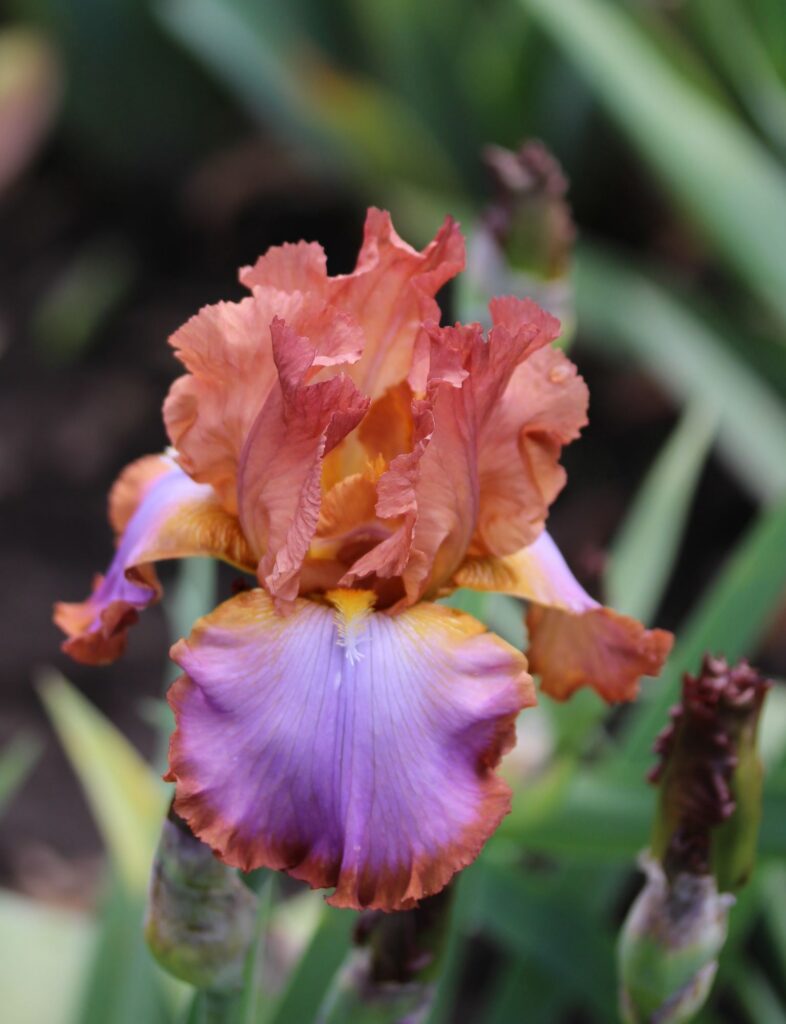

If you’ve visited Powell Gardens in May, you’ve likely noticed the spectacular display of irises blooming in the Fountain Garden. With more than one hundred cultivars, the collection bursts into bloom at the height of spring in nearly every color and pattern imaginable. From deep velvety purples and soft pastels to striking bicolors and ruffled petals, these plants are unforgettable!
Each cultivar represents decades of passion from hybridizers who worked to create new shapes, colors, and patterns. Our collection reflects that dedication, along with the care and commitment of the volunteers and staff who have maintained these treasured plants through the seasons.
The iris collection at Powell Gardens began in the 1990s thanks to Dr. Norlan Henderson. Dr. Henderson served as a botany professor at the University of Missouri–Kansas City for 24 years and was also an original board member of Powell Gardens. An avid iris hybridizer and lifelong plant enthusiast, he generously donated more than two decades’ worth of irises from his American Iris Society (AIS) Award of Merit collection, along with historic and species irises.
The collection featured the top 25 cultivars of tall bearded iris recognized by the American Iris Society each year from 1994 through 2014. In 2009, Powell Gardens hosted the American Iris Society National Convention, welcoming visitors to view more than 1,400 iris selections in bloom. That same convention was dedicated to Dr. Henderson in recognition of his “Lifetime of Science.”
Even into his nineties, Dr. Henderson continued volunteering and caring for the iris collection at Powell Gardens. He worked with the plants he loved until he was 95 years old.
After Dr. Henderson’s passing in 2013, the collection gradually declined due to limited volunteer support. To make the irises more accessible to visitors and easier to maintain, the remaining collection was relocated in 2019 from Iris Hill to the Fountain Garden. In 2020, additional irises were planted in the beds at Millstone Plaza. These beds highlight cultivars with local and historical significance, including several of Dr. Henderson’s favorites. Some are even named after his family members and friends.
Today, Dr. Henderson’s dedication bench still remains at Iris Hill, along with the subtle outlines of the original beds, a quiet tribute to the legacy he left behind. Each spring, the iris display honors the decades of passion, science, and volunteer care that built this remarkable collection.
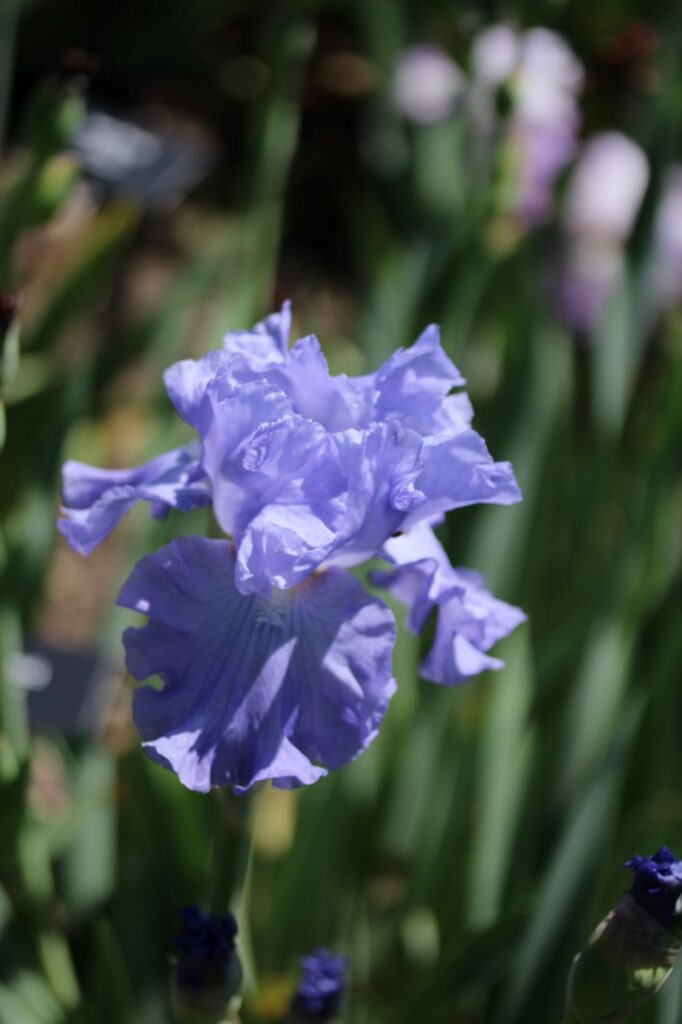
If the vibrant display at Powell Gardens inspires you to plant irises at home, you’re in good company. Irises are among the most beloved perennial garden plants because they are hardy, long-lived, and relatively easy to grow once established.
The most common garden varieties are bearded irises, which grow from thick underground stems called rhizomes. These rhizomes store energy for future blooms and allow the plant to spread over time.
Irises thrive best in full sun, ideally receiving at least six hours of sunlight each day. They also prefer well-draining soil, as overly wet conditions can lead to rot. Many gardeners improve their planting area by mixing compost into the soil to increase drainage and nutrients.
Unlike many plants, iris rhizomes should not be buried deeply. When planting, create a small mound of soil and spread the roots over it, leaving the top of the rhizome exposed to sunlight. This helps prevent rot and keeps the plant healthy.
Although iris rhizomes are commonly shipped and planted in late summer (August–September), they can also be planted in late spring or early summer. The key is to allow enough time for roots to establish before winter arrives.
When first planted, give irises a thorough watering. After that, they prefer relatively dry conditions and typically rely on natural rainfall except during extended dry spells.
Seasonal Iris Care
Irises require only modest care throughout the year, but a few simple practices will help keep them blooming beautifully.
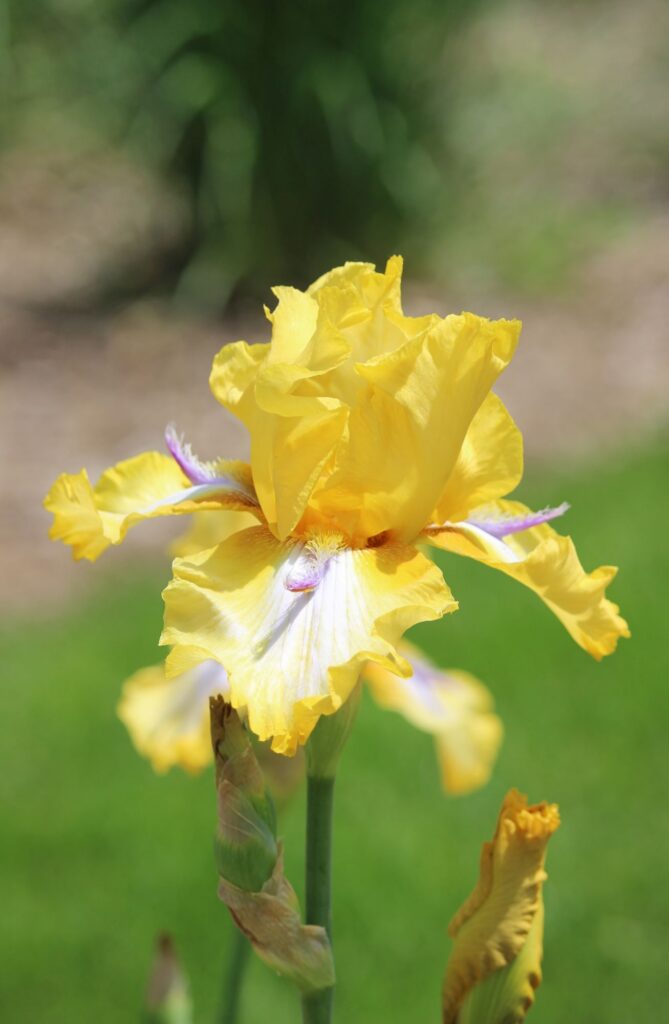
Few spring flowers create a display quite like a blooming iris bed. Their dramatic blooms, rich colors, and elegant form have captivated gardeners for generations.
At Powell Gardens, our iris collection continues to celebrate that legacy as we honor the dedication of Dr. Norlan Henderson and the many volunteers and staff who have cared for these plants over the years. When the irises bloom each May, they offer not only a beautiful display, but also a reminder of the passion and community that help gardens thrive.
We hope their beauty inspires you to plant a few irises of your own.
For more information about irises and iris cultivation, visit the American Iris Society at irises.org or click the button below to watch a video from Powell Gardens.