Have you heard a gardening talk about “winter interest” before? Winter interest is about noticing color, texture, form, and movement when flowers aren’t stealing the show. It’s the satisfaction of spotting something unexpected, the joy of discovery when the landscape feels quiet, and the reminder that nature never truly shuts down.
Even in February and early March, when winter feels long and spring seems far away, there is always something wonderful happening outdoors. Sometimes it’s bold and bright. Other times it’s small, tucked into bark, berries, or buds waiting patiently for you to notice.
How to Enjoy Winter Interest
Looking for winter interest is an invitation to slow down. Bundle up, pull on a hat and gloves, and take a short walk. Look closely. Pause often. Winter rewards the observant eye. Give these ideas a try!
- Taking a shorter, slower walk focused on details rather than distance
- Spending time outdoors in the morning or late afternoon, when low light highlights bark and branch structure
- Bringing a warm drink and treating your walk like a treat
Winter Interest at Powell Gardens
At Powell Gardens, winter reveals the bones of the landscape. Without leaves and blooms, plant structure takes center stage. Branch patterns, bark textures, evergreen forms, and early flowers quietly announce what’s to come in the spring season.
A winter walk offers a different kind of beauty, one that is peaceful, reflective, and full of anticipation. Much of Powell Gardens’ winter interest may be found in your garden, backyard, park, or other favorite outdoors spot! Read on to see what to look for.
What You Can See in Late Winter
Even before spring officially arrives, several plants are already hard at work.
Early Blooms
Yes, there are flowers in winter and very early spring! These early flowers are small but powerful, offering tiny signs that the season is shifting.
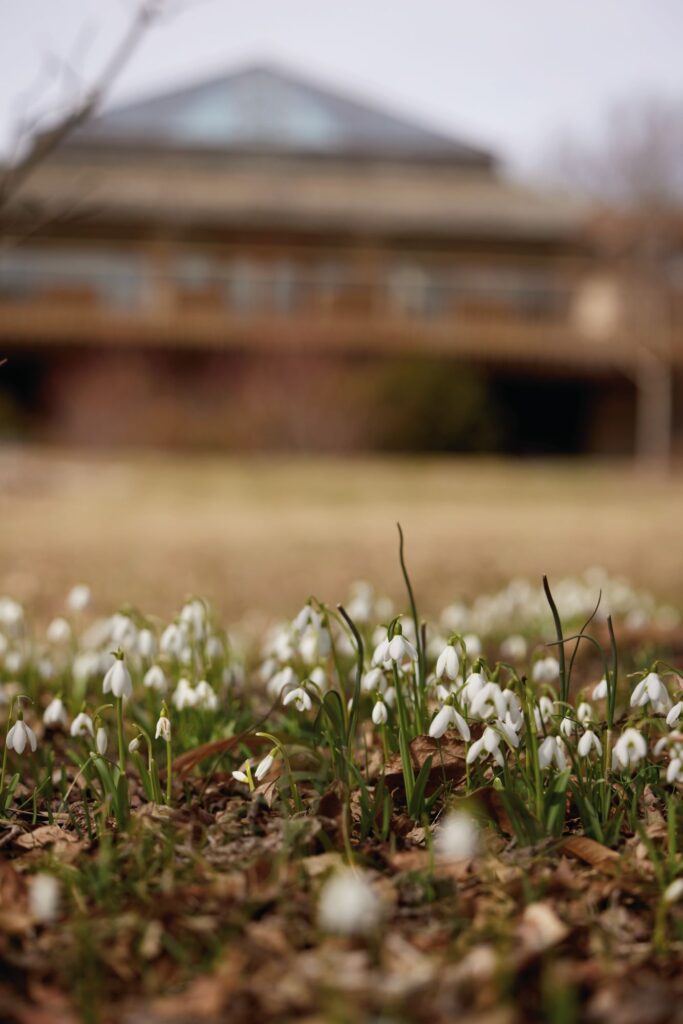
- Snowdrops (Galanthus) often bloom in February, pushing bravely through cold soil
- Hellebores (Helleborus varieties) bloom from February through April, with nodding flowers in soft, elegant colors
- Witch hazel (Hamamelis varieties) can bloom from January through March, with ribbon-like flowers that look almost unreal on bare branches
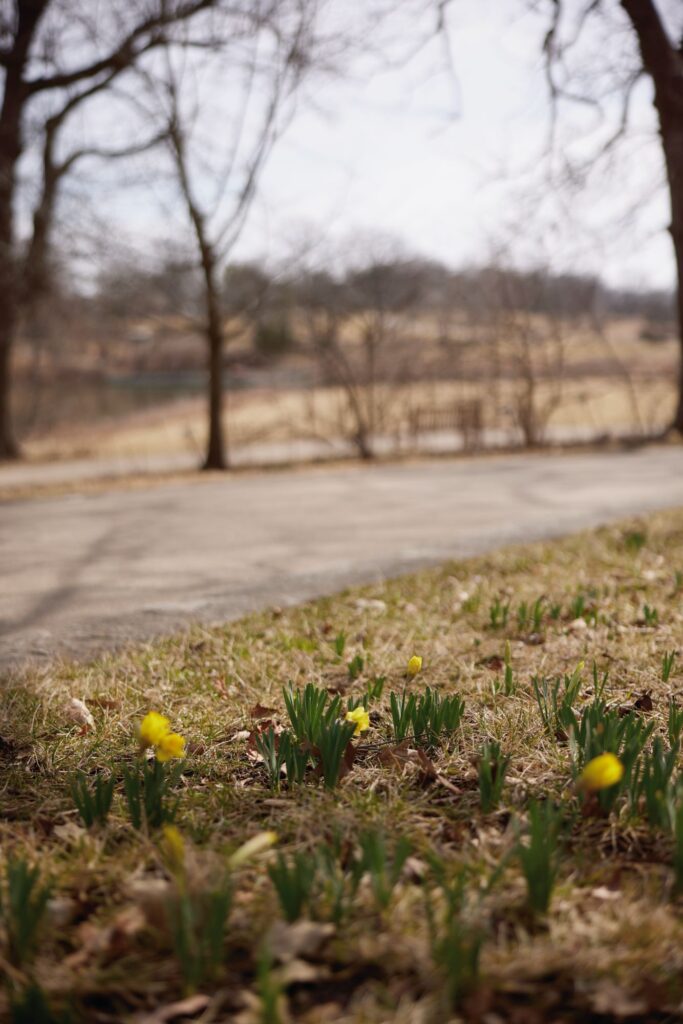
- Winter aconite (Eranthis hyemalis) brings cheerful yellow blooms in March and April

Fruits and Seed Heads
Winter landscapes are full of lingering fruits and seed structures:
- Winterberry (Ilex verticillata) shines with bright red berries against bare branches
- Coralberry (Symphoricarpos orbiculatus) may hold onto its berries into winter
- Evergreen trees display pinecones in a surprising range of shapes and sizes
- Southern magnolia (Magnolia grandiflora) often carries large, sculptural seed heads from the previous growing season
- Hydrangeas retain dried flower heads that add structure and texture long after blooming
Foliage That Holds Its Own
Evergreens are the backbone of winter interest.
- False cypress, holly, cedar, arborvitae, and pines offer a range of greens, blues, and golds
- Yucca stands out with blue-green foliage and variegated forms with creamy yellow stripes
- Southern magnolia provides thick, dark green leaves with rich brown undersides that catch the light beautifully
Bark and Branches Worth a Second Look
Winter is when trees truly shine:
- Paperbark maple (Acer griseum) peels dramatically, revealing warm cinnamon tones
- River birch (Betula nigra) and seven-son tree (Heptacodium miconioides) both feature exfoliating bark
- Persian ironwood (Parrotia persica) and American sycamore (Platanus occidentalis) display mottled bark with subtle color variation
- Red twig dogwood (Cornus sericea) lights up the landscape with bright red stems, alongside yellow cultivars like ‘Flaviramea’ and multicolored ‘Arctic Fire’
- Harry Lauder’s walking stick and curly willow captivate with twisted, sculptural branches that feel almost whimsical

Adding Winter Interest to Your Home Landscape
You don’t need acres of garden space to enjoy winter interest. A few intentional choices can make a big difference:
- Plant early bloomers like snowdrops, hellebores, and witch hazel
- Include shrubs with berries or persistent seed heads
- Use evergreens to anchor your landscape year-round
- Choose at least one tree or shrub known for interesting bark or branch structure
Most importantly, give yourself permission to appreciate subtlety. Winter interest isn’t loud but it’s deeply rewarding. Winter reminds us that beauty doesn’t disappear; it simply changes form. And if you take the time to look closely, there’s always something wonderful waiting just outside your door.
Related Posts