Discover Late-Summer Beauty in the Marlese Lowe Gourley Island Garden
Read More
Powell Gardens is open Tuesday-Sunday (9 a.m. - 5 p.m.). Click for hours of operation.


At the heart of Powell Gardens sits the Visitor Center, an architectural landmark and the starting point for visits to the Gardens. Surrounded by vibrant plantings, pathways, and sweeping green space, the Visitor Center area offers a beautiful introduction to the botanical experiences that unfolds across the Gardens.
Designed by renowned architect E. Fay Jones, the Visitor Center serves as Powell Gardens’ central hub. Here, guests find spaces for educational programs, events, and gatherings, along with The Marketplace, the garden gift shop and market. Just outside the Visitor Center, a series of gardens and pathways invite visitors to explore plant collections, seasonal displays, and tranquil landscapes.
The crown jewel of the Visitor Center is the Conservatory. This striking glass-domed structure can be seen across the Gardens and is a must-visit space for guests. Inside, a climate-controlled environment provides a year-round space where visitors can be inspired by diverse plant displays and seasonal installations.
Rotating exhibits transform the Conservatory throughout the year, reflecting the themes of Powell Gardens’ seasonal festivals and events. Whether filled with tropical foliage, colorful blooms, or imaginative displays, the Conservatory offers an immersive garden experience in every season.
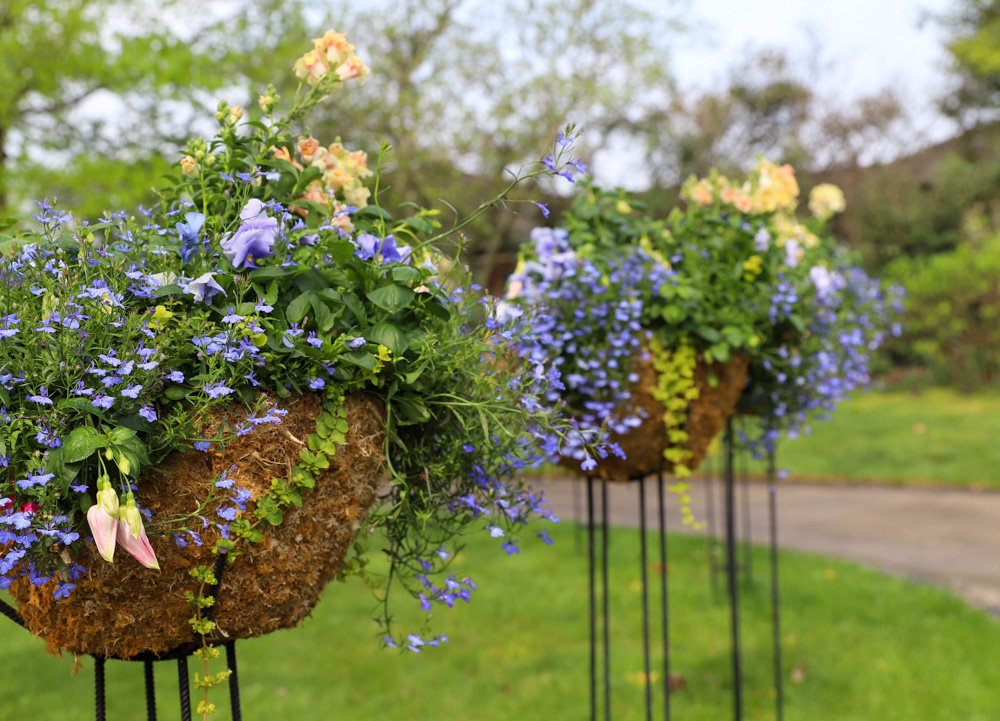
Surrounding the Visitor Center are the Terrace Gardens, where vibrant plantings of annuals, perennials, and tropical species create ever-changing displays.
These beds are redesigned three times each year:
A recent sustainability initiative has increased the use of native plant species and cultivars throughout the Terrace plantings. These selections demonstrate how home gardeners can incorporate native plants into their own landscapes and support pollinators while conserving water.
Just off the main path leading to the Dogwood Walk, the Hummingbird Garden bursts with nectar-rich blooms that attract some of the garden’s most energetic visitors.
Plantings include azalea, honeysuckle, giant anise hyssop, pentas, and lantana—favorite nectar sources for hummingbirds darting from flower to flower. Nectar feeders add another draw for these tiny birds.
This lively garden also supports bees and butterflies, and in spring, migrating orioles often stop to feed as they travel north for the summer.
Tucked beside the Hummingbird Garden, the Stumpery Garden offers a cool and shaded retreat. Here, ferns, coral bells, lungwort, and other shade-loving perennials grow among stumps and fallen logs, creating a woodland-inspired setting.
A picnic table beneath the tall tree canopy invites visitors to pause and enjoy lunch while listening to the sounds of birds and rustling leaves.
Along the Visitor Center’s east terrace, the Conifer Garden showcases a remarkable collection of specialty and dwarf conifers donated by Marvin Snyder, past president of the American Conifer Society.
Nearly all hardy genera of conifers are represented here, including firs, junipers, spruces, pines, arborvitae, hemlocks, and plum-yews. The garden’s foundation, constructed using sandstone rubble and subsoil from the nearby Fountain Garden excavation, provides the excellent drainage that conifers prefer.
Certified as a Reference Garden by the American Conifer Society, this collection offers year-round interest through varied textures, shapes, and foliage colors. It also encourages gardeners to consider conifers as dynamic alternatives to the commonly sheared shrubs often used in residential landscapes.
The landscape surrounding the Visitor Center blends pastoral openness with the beauty of the site’s original native trees. Broad lawns and groves of mature trees create a welcoming sense of space, while naturalistic beds of understory trees, shrubs, and flowering plants connect these areas and support a healthy ecosystem.
Two paved pathways cross this landscape, linking the Visitor Center with the Marlese Lowe Gourley Island Garden and encouraging visitors to continue their exploration deeper into the Gardens.
At the center of the trolley circle, a champion smoke tree serves as a focal point. During the annual Festival of Lights, the tree is illuminated with colorful lights, becoming a seasonal highlight for winter visitors.
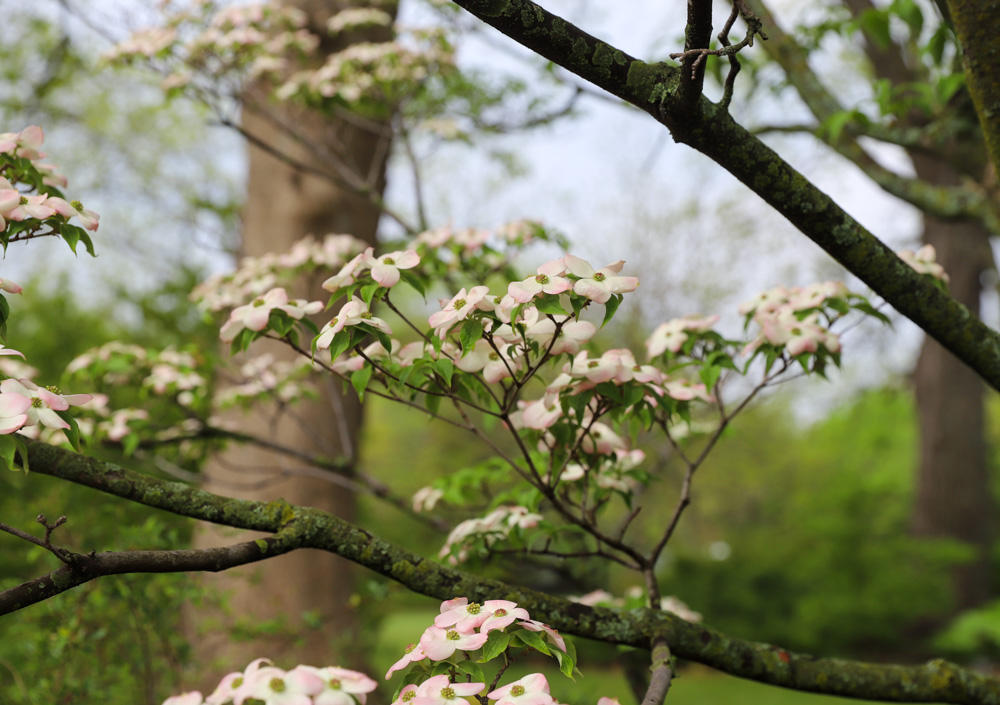
Extending south from the Visitor Center, the Dogwood Walk is a shaded pathway that leads visitors toward the Marlese Lowe Gourley Island Garden. Along the route, flowering trees (particularly dogwoods, Cornus species) create a beautiful seasonal display.
In spring, these trees burst into bloom, filling the path with soft colors and signaling the arrival of the gardening season.
Nearby, the Dennis & Annette Young Magnolia Walk celebrates one of Powell Gardens’ most significant plant collections. Named in honor of former Director of Horticulture Alan Branhagen, the collection is nationally recognized by the American Public Gardens Association and certified by the North American Plant Collections Consortium.
The walk features numerous magnolia cultivars and species, including ‘Holland Rose,’ ‘Simple Pleasures,’ and ‘Emma Cook,’ along with species such as Magnolia kobus var. borealis and Magnolia tripetala. Saucer magnolia cultivars like ‘Amabilis,’ ‘Grace McDade,’ and ‘Alexandrina’ add to the diversity of forms and blooms.
When these trees flower in spring, the Magnolia Walk becomes one of the most breathtaking places in the Gardens.
From vibrant seasonal beds to shaded retreats, the gardens surrounding the Visitor Center offer a rich introduction to the beauty and diversity of Powell Gardens. Whether you’re beginning your visit, pausing to explore plant collections, or simply enjoying a quiet moment outdoors, this central landscape reflects the spirit of the Gardens.