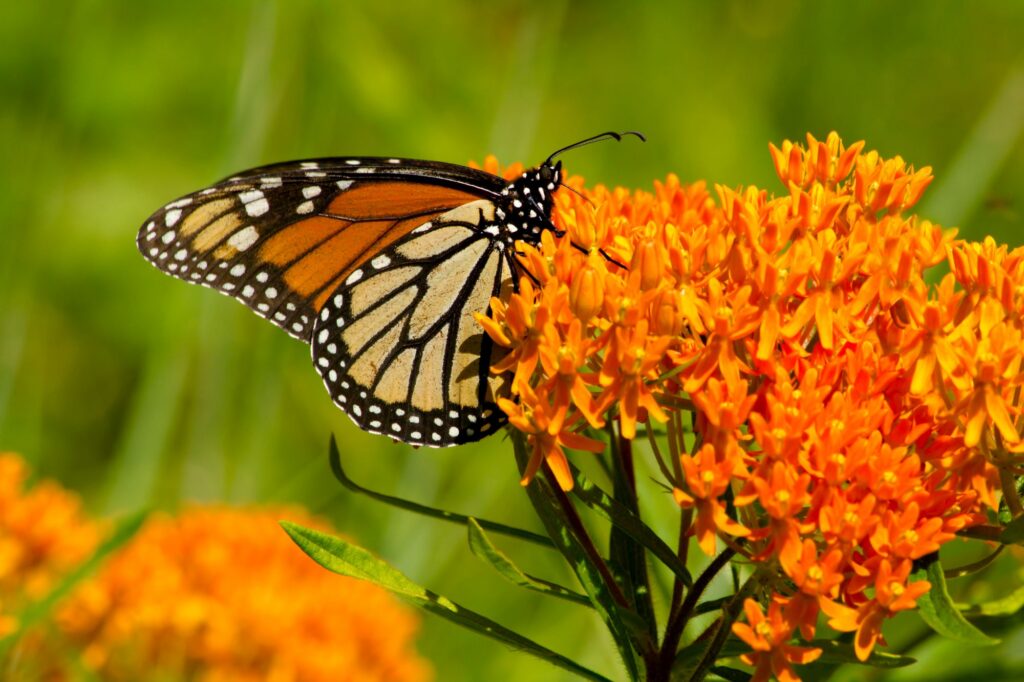
Milkweed: Monarch Host Plant
Read More
Powell Gardens is open Tuesday-Sunday (9 a.m. - 5 p.m.). Click for hours of operation.


If you want to support butterflies in your garden (especially monarchs) few plants are more important than milkweed. These hardy native plants provide food, shelter, and a place for monarch butterflies to begin their remarkable life cycle.
Across prairies, roadsides, and gardens throughout the Midwest, milkweed plays a critical role. This plant supports pollinators and helps to maintain healthy ecosystems. For gardeners looking to create a wildlife-friendly landscape, milkweed is one of the best plants to start with.
Many butterflies rely on specific plants for their caterpillars. While adult butterflies may drink nectar from many types of flowers, their caterpillars often require just one or a few plant species to survive. These plants are called host plants.
For monarchs, milkweed is that host plant.
Milkweed is essential to the survival of the Monarch butterfly. In fact, it is the only plant that monarch caterpillars can eat. When female monarchs search for a place to lay eggs, they use chemical signals in the leaves to identify milkweed. Once the eggs hatch, the caterpillars feed exclusively on milkweed leaves until they form a chrysalis and transform into a butterfly.
Because of this relationship, planting host plants is just as important as planting nectar flowers when creating a butterfly-friendly garden.
FUN FACT: Milkweed contains compounds called cardiac glycosides, which the caterpillars absorb as they grow. These chemicals make both the caterpillars and adult butterflies toxic to predators, providing a powerful form of natural protection.
Without milkweed, monarch butterflies cannot complete their life cycle. As milkweed populations declined across North America due to development, mowing, and agricultural practices, monarch populations also dropped dramatically.
Planting milkweed in gardens and landscapes is one of the most effective ways individuals can help support monarch conservation.
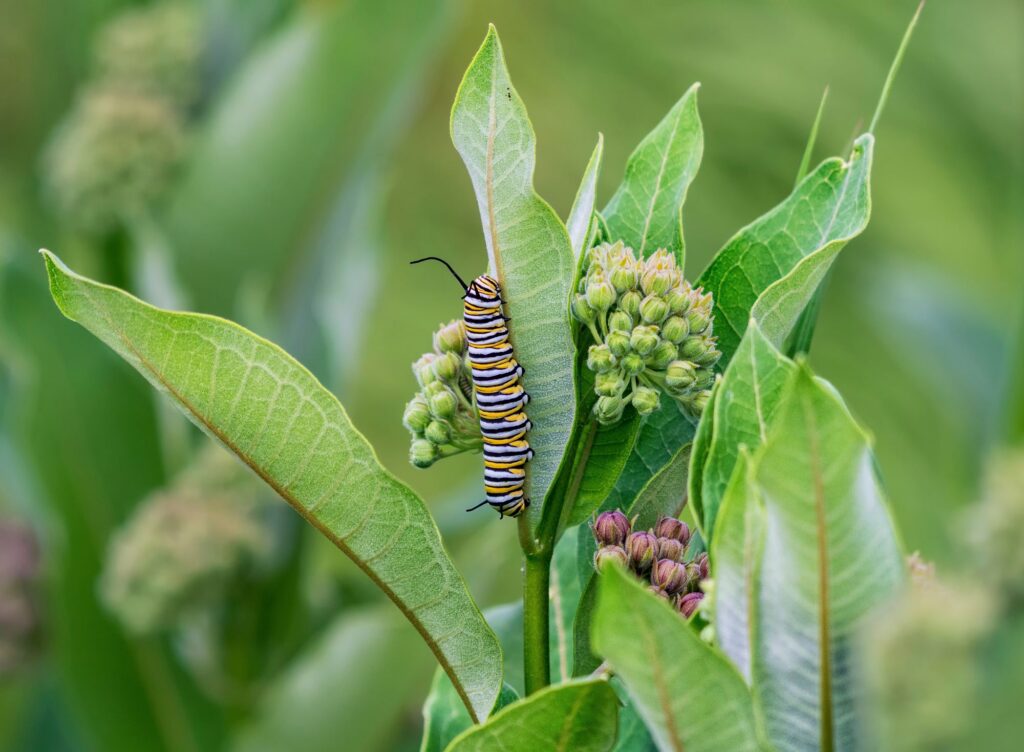
There are more than 100 species of milkweed across North America, many of which thrive in the Midwest. These are a few popular species for gardens in our region:
Asclepias tuberosa (Butterfly Milkweed)
This bright orange milkweed is one of the most popular species for gardens. It prefers well-drained soil and sunny locations and attracts a wide range of pollinators.
Asclepias syriaca (Common Milkweed)
A tall prairie species with fragrant pink flower clusters, common milkweed spreads readily and is a favorite host plant for monarchs. It works best in larger garden spaces or naturalized plantings.
Asclepias incarnata (Swamp Milkweed)
With soft pink flowers and a more compact habit, swamp milkweed grows well in gardens with moist soil and is often easier to manage than common milkweed.
Asclepias viridis (Green Milkweed)
Native to prairies and open areas, green milkweed has pale greenish flowers and provides an important host plant in drier landscapes.
Each species offers nectar for pollinators and leaves for monarch caterpillars, making them valuable additions to wildlife gardens.
Milkweed is surprisingly easy to grow, especially when planted in the right conditions.
Milkweed may look like just another wildflower, but it supports one of the most extraordinary migrations in the natural world. Each year, Monarch butterfly populations travel thousands of miles between Mexico, the United States, and Canada.
By planting milkweed in our gardens, parks, and community spaces, gardeners help create the habitat monarchs need along their journey. Sometimes the smallest plants can make the biggest difference.