MCRA Update: Growing a Healthier Landscape Through Fall and Winter
Read More
Evergy Festival of Lights is coming November 19-January 3, 2027. Click for tickets.


The Midwest Center for Regenerative Agriculture (MCRA) has had a busy few months! From harvesting orchard produce for local families to restoring native habitats and expanding the grazing herd, the team has continued exploring how regenerative agriculture can benefit the land, wildlife, and surrounding community at Powell Gardens and Colonial Farms.
Here’s a look back on the summer and fall, with a few things to look forward to this winter.
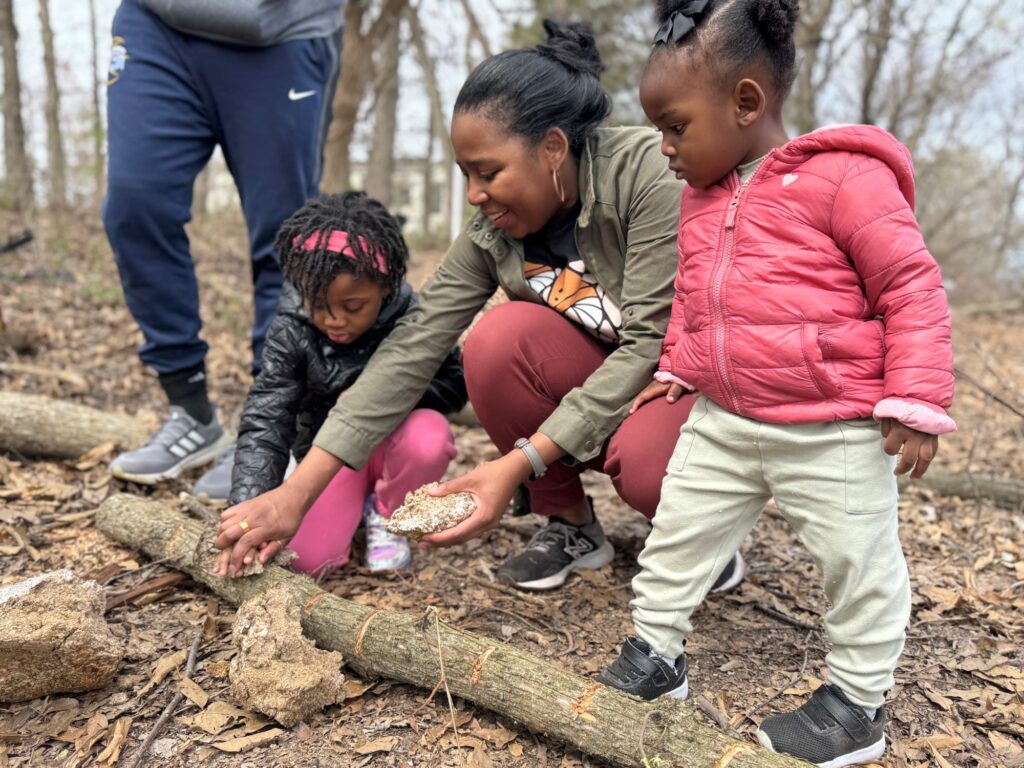
This fall, the MCRA orchard harvest brought together volunteers from the community and a group from Catholic Charities. Together, they helped gather the season’s harvest, with 18 bushels of produce donated to a local food pantry. The effort is a reminder that regenerative agriculture can do more than support healthy soil and thriving ecosystems. It can also help connect people with fresh food and create meaningful opportunities to serve our neighbors.
The MCRA also welcomed three K–12 field trips to Colonial Farms, giving students opportunities to learn about agriculture and the natural world firsthand. These experiences help introduce younger generations to the connections between farming, conservation, and environmental stewardship.
Healthy landscapes depend on more than what we plant. They also require thoughtful land management, the restoration of native habitats, and practices that support biodiversity.
Recently, volunteers from the Osage Trails Master Naturalists helped remove invasive species from a restoration area at the MCRA. Removing invasive plants helps create space for native species to thrive and supports the long-term health of the landscape.
The MCRA team is also working to restore 13 acres of overgrown former Conservation Reserve Program (CRP) land at Ona’s Prairie. The project will begin with removing invasive brush, followed by seeding the area with seeds collected from other portions of the remnant prairie. Using locally collected seed will help restore native plant communities suited to the site.
These efforts are part of a broader commitment to caring for the land through practices that encourage ecological diversity and resilience.
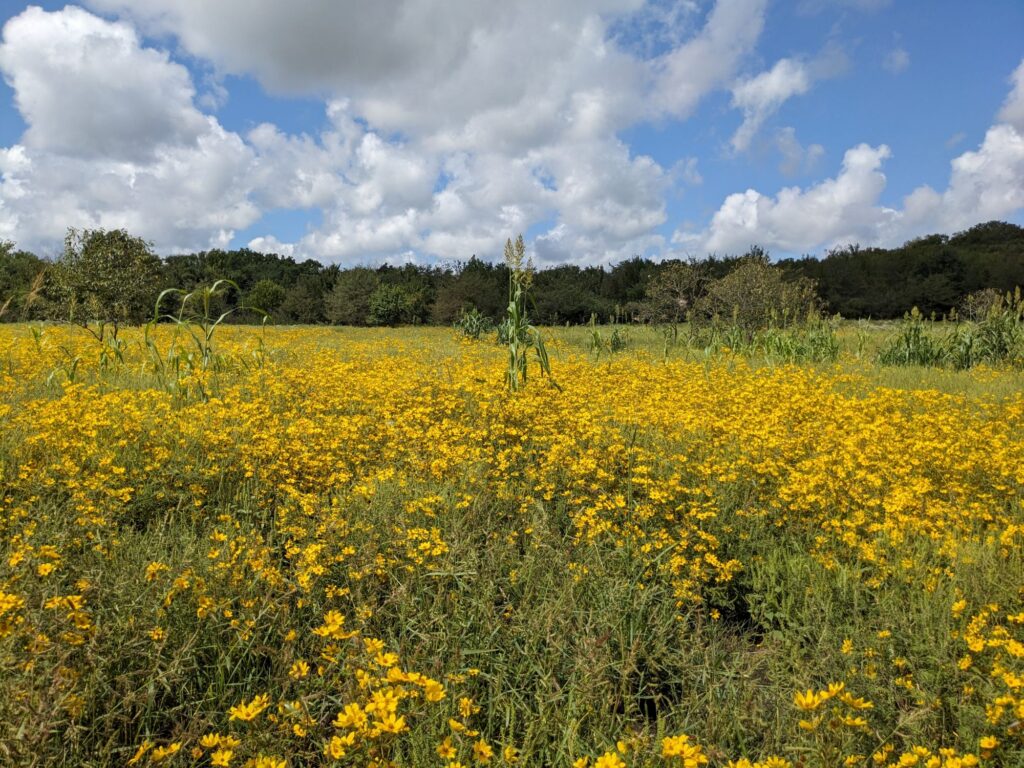
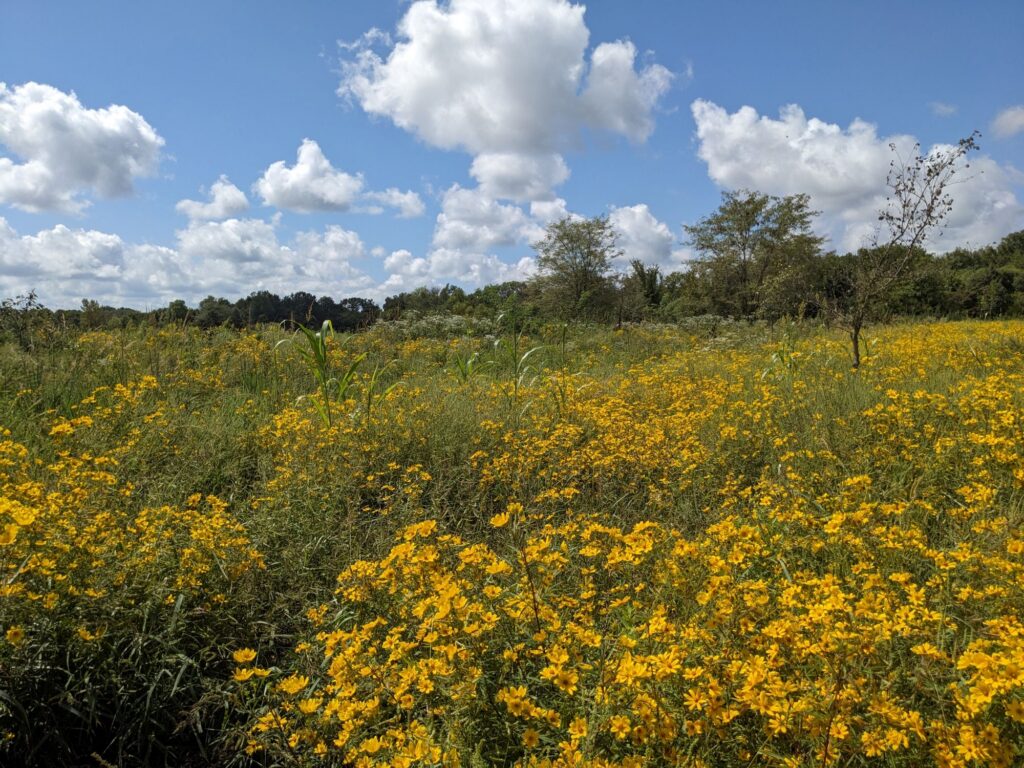
Earlier this year, the MCRA team used mob grazing and seeded selected areas with native plants and forage cover crops. Mob grazing involves moving livestock through smaller areas for short periods, allowing for more intentional management of grazing pressure and recovery time for vegetation.
The results were especially striking in August, when these areas produced a spectacular display of plant growth and color. Among the plants flourishing in the seeded areas was bur marigold (Bidens aristosa), a native flowering plant that adds seasonal interest and supports the landscape’s ecological diversity. Forage cover crops, including sorghum-sudangrass, were also part of the planting mix.
These areas demonstrate how managed grazing and intentional planting can be used together to support productive land while creating opportunities for native vegetation to flourish.
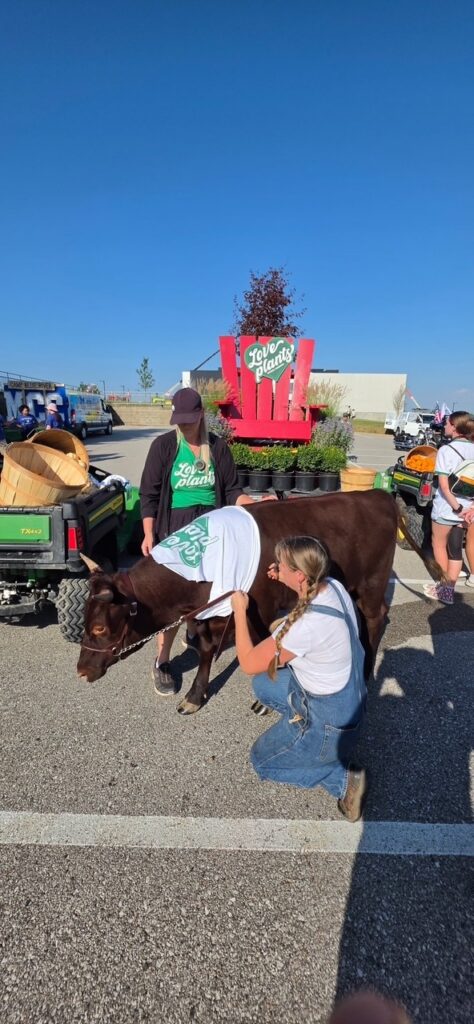
The MCRA’s livestock herd has grown from 27 to 40 head, expanding the team’s ability to explore managed grazing as part of its regenerative agriculture practices.
One of our herd’s stars, Redbud, made her debut walk in the Blue Springs fall parade.
The team is also working with two Osage Trails Master Naturalist students who are completing their capstone project at the MCRA. Their research will examine how grazing affects native plant diversity, adding to our understanding of the relationship between livestock management and healthy plant communities.
By combining hands-on land management with observation and research, the MCRA continues to explore practical ways to care for agricultural landscapes while supporting biodiversity.
There are more opportunities to support habitat restoration and conservation in the months ahead.
On December 5, from 1–5 p.m., the MCRA will host a Christmas Cedar Tree event. Participants can help restore habitat by removing cedar trees while supporting Powell Gardens and KC WildLands (KCWL). As an added seasonal bonus, you can take home a Christmas tree!
The work will also continue at Ona’s Prairie, where brush removal is an important first step toward restoring native prairie habitat. Projects like these take time, but each step helps create healthier landscapes for native plants and wildlife.
From community harvests to native prairie restoration, the MCRA is demonstrating how thoughtful land management can benefit both people and the environment. We look forward to seeing these projects grow in the seasons ahead.
Want to learn more or get involved? Visit the Midwest Center for Regenerative Agriculture online or give today.