Plant Profile: Persimmon
Read More
Dark Forest is coming October 16-17, 22-24, and 30-31. Click for tickets.

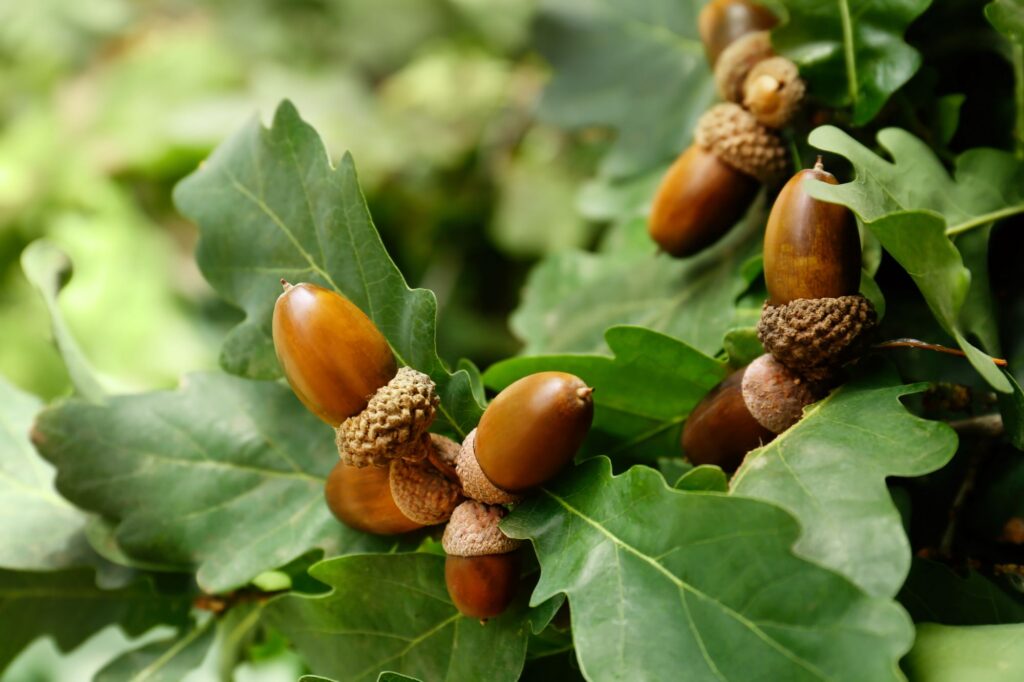

Few trees are as iconic or as important as the oak (Quercus spp.). From towering white oaks shading walking trails to stately red oaks coloring the autumn landscape, these native trees have shaped Missouri’s forests, wildlife, and history for centuries.
Missouri is home to 22 native or naturalized species of oak (Quercus spp.), making them the state’s most significant group of trees. Whether you’re hiking through an Ozark woodland or enjoying the beauty of Powell Gardens, chances are you’ve spent time beneath the branches of an oak.
“Oak” isn’t a single species. The name refers to a diverse group of trees in the beech family (Fagaceae). Missouri’s native oaks fall into two primary groups: white oaks and red oaks.
White oaks are known for their rounded leaf lobes, lighter gray bark, and acorns that mature in a single growing season. Their acorns contain fewer tannins, making them sweeter and especially attractive to wildlife.
Some familiar Missouri species of white oaks include:
Red oaks are easy to recognize by the tiny bristles at the tips of their leaves. Their acorns take two years to mature and contain more tannins, giving them a bitter taste. These trees typically have darker, rougher bark and brilliant fall color.
Common Missouri species of red oaks include:
You don’t have to be a botanist to identify Missouri’s two major groups of oaks. Here are three easy clues to look for.
2. Check the Bark: White oaks typically have light gray bark that appears flaky or scaly. Red oaks usually have darker gray or nearly black bark with deep ridges and a rough texture.
3. Examine the Acorns: White oaks mature in one growing season, are less bitter, and often begin germinating shortly after they fall in autumn. Red oaks take two growing seasons to mature, are higher in tannins which make them more bitter, and germinate the following spring.
Oak trees don’t just provide shade. They support entire ecosystems!
Ecologists often refer to oaks as a keystone species, meaning countless other plants and animals depend on them for survival. Few trees contribute more to biodiversity in the Midwest.
The acorns from oak trees are one of nature’s most valuable food sources. White-tailed deer, wild turkeys, squirrels, blue jays, wood ducks, raccoons, rabbits, and many other animals rely on acorns for food each fall. In fact, acorns can make up more than three-quarters of a white-tailed deer’s diet during late autumn and early winter.
Oak trees also provide nesting sites, shelter, and habitat for hundreds of insects. Their leaves feed the caterpillars of numerous butterflies and moths like hairstreak butterflies, duskywing skippers, the giant Polyphemus moth, and spiny oakworm moths. Those insects, in turn, become food for birds and other wildlife.
Simply put, healthy oak trees help support healthy ecosystems.
Many oak trees can live for generations. While lifespans vary by species, some white oaks may grow well beyond 100 years, reaching heights of more than 100 feet.
Their wood is equally remarkable. White oak contains natural structures called tyloses that make the wood highly resistant to water. This unique characteristic has made white oak the preferred choice for shipbuilding, barrels used to age bourbon and wine, flooring, and fine furniture for centuries. Red oak remains an important hardwood for flooring, cabinetry, and construction, though it is less water-resistant than white oak.
Today, oak continues to be one of Missouri’s most valuable forest resources.
Long before modern agriculture, people across the Northern Hemisphere relied on acorns as a nutritious food source after removing their naturally bitter tannins.
Early Ozark settlers gathered acorns to feed livestock, particularly hogs, each autumn.
Oak trees have also inspired folklore for generations. One traditional Missouri saying suggested if the oak trees leafed out before ash trees in the spring, a wet summer would follow. Another saying advised it was time to plant corn once the oak leaves were about the size of a squirrel’s ear.
These stories remind us how closely people once watched and depended on the rhythms of the natural world.
Although mature oaks appear incredibly strong, they are surprisingly sensitive to disturbance around their roots.
Construction, soil compaction, or cutting major roots can permanently damage even large, healthy trees. Because young oaks develop deep taproots early in life, they can also be difficult to transplant successfully.
If you’re planting an oak, choose its location carefully and give it room to grow. With proper care, it may provide shade and habitat for generations to come.
Did You Know? Blue jays are expert acorn planters! They collect and bury hundreds of acorns each fall, then forget where many of them are hidden. Those forgotten acorns often sprout into new oak trees, making blue jays one of nature’s most important seed dispersers.
Whether admired for their brilliant fall color, their towering branches, or the wildlife they support, oaks are among the most valuable native trees in the Midwest.
This autumn, take a closer look the next time you visit Powell Gardens. Notice the shape of the leaves, search for acorns beneath your feet, or watch for squirrels, birds, and butterflies that depend on these remarkable trees.
Every oak tells a story of connection and the incredible diversity that makes Missouri’s landscapes so special.